Roadster Club
Acceleration and the next challenges
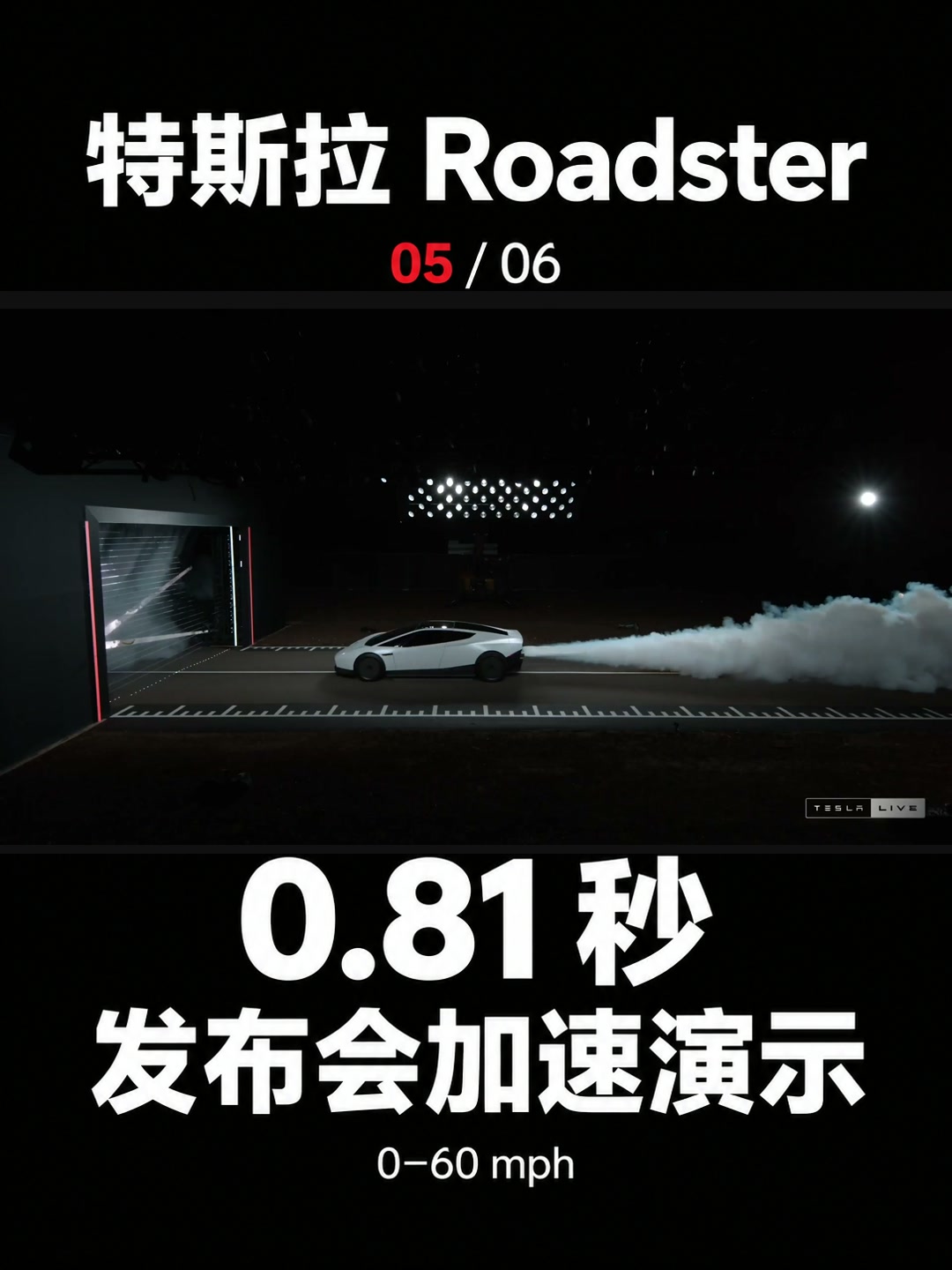
The discussion begins with the 0–60 mph target. Musk calls for less than one second, after which the presentation shows test footage and stages another attempt at the venue. The timing display initially produces an implausibly small reading, which the presenters reject. They subsequently report 0.81 seconds for the demonstration. The endpoint is 60 mph, approximately 96.6 km/h, rather than 100 km/h.
While waiting for the time, the team describes the rear propulsion system. The recording states that four rear thrusters produce more than 80 kilonewtons of thrust, with exhaust faster than the speed of sound and visible Mach diamonds. Musk then uses F = ma to explain the direction for further improvements: increase force and reduce mass. He says he expects the production car to improve on the demonstration’s acceleration.
On speed, the presenters mention more than 230 mph, approximately 370 km/h. The conversation then moves to possible future challenges, including another attempt at jumping Snake River Canyon and a goal around Mach 0.5, perhaps higher. Those are discussed as future demonstrations and development ambitions.
The figures in this section have different meanings. The 0.81-second figure is the reading reported during the event; more than 230 mph is a performance statement in the presentation; Mach 0.5 and the canyon jump are proposed future challenges. Keeping those contexts attached is essential to interpreting the numbers.
What to take from this chapter
The demonstration result, the stated performance and the future goals are separate kinds of information.
Rollout, tires, surface, payload and independent timing verification are not established. The demo reading is not assigned to every production trim.
- 0.81 s
- Reported 0–60 mph demonstration reading.
- >230 mph
- Speed statement in the recording, about 370 km/h.
- Around Mach 0.5
- A future challenge discussed by the presenters.